
#6 Craftsmanship Rooted in Japan’s Regional Resources and Techniques: WEAVE HARISA

The Chugoku region is located in the western part of Japan’s Honshu island and consists of five prefectures including Hiroshima, Okayama, Shimane, Tottori, and Yamaguchi. The region also is covered by the Sanyo area, which faces the Seto Inland Sea, and the San’in area along the Sea of Japan. Rich in natural beauty, mythology, history, and culture, the Chugoku region continues to preserve landscapes and ways of life that are distinctly Japanese.
International interest in the region has been growing in recent years. Hiroshima, Okayama, and Yamaguchi Prefectures, among others, have seen record numbers of overnight stays by international visitors. Against this backdrop, a growing number of local companies are drawing on the region’s resources, history, and craftsmanship to create new value and take on the challenge of expanding into global markets.
The CO:Design team visited five companies representing each prefecture from the Chugoku region that participated in a workshop jointly organized by JETRO and Parsons School of Design. During our visits, we explored each company's production sites and spoke with business owners and craftspeople about the techniques and philosophies they have inherited, as well as their ambitions for reaching international markets.
In this series, we introduce the values embedded in each company’s craftsmanship, their connection to their local communities, and the insights and lessons gained through their efforts to expand overseas.
WEAVE HARISA (Okayama Prefecture)
Bringing a Needle-Making Tradition Dating Back to the Meiji Era to the World
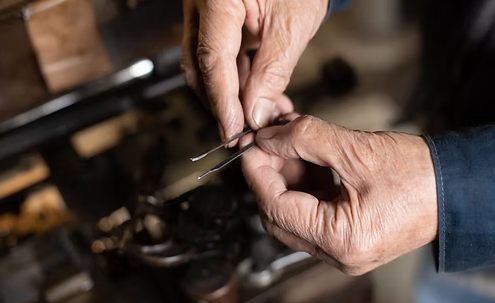
Located in northeastern Okayama Prefecture, Mimasaka City is surrounded by lush mountains and shaped by a rich natural and cultural heritage. Tucked away in this quiet landscape is a small factory where the craft of needle making has been passed down since the Meiji era.
Since its founding, WEAVE HARISA has dedicated itself to manufacturing as a specialist in needles. Its products include knitting needles essential components in industrial knitting machines used to produce textiles such as knitwear, fishing nets, and agricultural netting as well as yarn guides* and specialized needles for handicrafts. Each product requires the precise forming and finishing of small metal components for a specific purpose.
*Yarn guides are components in knitting and textile machinery that guide yarn into the correct position during production.


The company’s roots can be traced back to a needle manufacturer founded in Osaka in 1905. As Japan’s textile industry developed, the company produced needles for both industrial and domestic knitting machines. As the business expanded, it established a factory in Okayama Prefecture, where WEAVE HARISA is based today. Over time, however, textile production increasingly shifted overseas, leading to a decline in domestic demand for needles.
In 2001, the needle manufacturer that preceded WEAVE HARISA closed its business. Yet many longtime customers who had relied on its needles wanted the supply to continue. Susumu Yoneto, who was working at the Okayama factory at the time, decided to take action. He inherited the machinery and equipment and founded WEAVE HARISA that same year, preserving a needle-making tradition that might otherwise have disappeared with the factory’s closure.
Today, that legacy is carried forward by his son, Jun Yoneto, the company’s second-generation president.


Bringing Industrial Craftsmanship into Everyday Life
In recent years, WEAVE HARISA has begun applying its decades of needle-making expertise to new fields. One such area is tableware designed for everyday consumers.
One example is a food pick developed using the company’s needle-making techniques. Thin stainless steel is precisely pressed and shaped so that food can be easily pierced and held securely in place. The metal component is paired with a wooden handle crafted by a local woodworker.
The company has also expanded its product line by adapting the shapes and techniques of the knitting needles it has produced for decades. New products include drink stirrers and a collection of “micro cutlery,” including miniature forks, knives, and spoons.
At first glance, industrial knitting needles and tableware may appear to have little in common. Yet both rely on the same fundamental expertise: bending, grinding, polishing, and shaping slender pieces of metal according to their intended use.
Techniques that have supported industry for generations are now taking on new forms and finding their way into our everyday lives.


Turning New Ideas into Reality Through Global Collaboration
Alongside developing its own brand, WEAVE HARISA is working with people and communities in Japan and abroad to adapt its inherited craftsmanship to contemporary needs and explore new possibilities for making.
One example is the development of a specialized needle for making lei, a tradition deeply rooted in Hawaiian culture. The project began when a customer who had studied lei making in Hawaii and now shares the tradition in Japan approached the company with a challenge: it was difficult to find a needle that could be used without damaging the delicate flowers.
In response, WEAVE HARISA developed a prototype, applying its long-established needle-making expertise to an entirely new context.
The company has also begun exploring new forms of collaboration overseas.
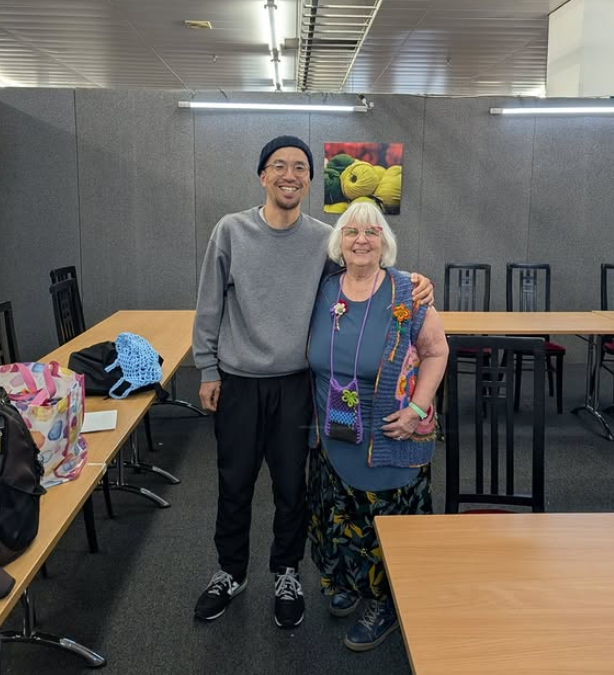
While looking for ways to create needles more closely connected to handcraft, Yoneto became interested in the creative possibilities of latch-hook crafts. During this exploration, he connected with Roslyn, a former elementary school art teacher based in the United Kingdom.
Through her experience teaching children, Roslyn had seen how some struggled with conventional crochet hooks and structured knitting patterns. Together, she and Yoneto began developing a tool that would allow beginners and children to enjoy making things by hand in a simpler, more intuitive, and creative way.
Today, Roslyn introduces children and beginners to the joy of handcraft through workshops and events using WEAVE HARISA’s tools. Looking ahead, the team is also considering further development of the packaging and turning the concept into a complete crochet kit.
“In an age of AI and digital technology, I want children to experience the joy of making something with their own hands,” Yoneto says.
WEAVE HARISA listens closely to the simple idea of, “I wish something like this existed,” and combines those needs with the skills it has cultivated over generations to create something new.
Rather than simply preserving a needle-making tradition inherited from the Meiji era, WEAVE HARISA continues to expand what that tradition can become. Through encounters and collaborations with people in Japan and around the world, the company is carrying its craftsmanship into new markets and passing its possibilities on to the next generation.

Sources:


Comments