
#8 Craftsmanship Rooted in Japan’s Regional Resources and Techniques: KAJIKOBO HIROMITSU


The Chugoku region is located in the western part of Japan’s Honshu island and consists of five prefectures including Hiroshima, Okayama, Shimane, Tottori, and Yamaguchi. The region also is covered by the Sanyo area, which faces the Seto Inland Sea, and the San’in area along the Sea of Japan. Rich in natural beauty, mythology, history, and culture, the Chugoku region continues to preserve landscapes and ways of life that are distinctly Japanese.
International interest in the region has been growing in recent years. Hiroshima, Okayama, and Yamaguchi Prefectures, among others, have seen record numbers of overnight stays by international visitors. Against this backdrop, a growing number of local companies are drawing on the region’s resources, history, and craftsmanship to create new value and take on the challenge of expanding into global markets.
The CO:Design team visited five companies representing each prefecture from the Chugoku region that participated in a workshop jointly organized by JETRO and Parsons School of Design. During our visits, we explored each company's production sites and spoke with business owners and craftspeople about the techniques and philosophies they have inherited, as well as their ambitions for reaching international markets.
In this series, we introduce the values embedded in each company’s craftsmanship, their connection to their local communities, and the insights and lessons gained through their efforts to expand overseas.
KAJIKOBO HIROMITSU (Shimane Prefecture)
Carrying Forward Over 200 Years of Blacksmithing Tradition Rooted in Japanese Sword Making
Based in Yasugi City, Shimane Prefecture, Kaji Kobo Hiromitsu is a long-established blacksmith workshop that has carried on the craft of Japanese blacksmithing for more than 200 years. At the heart of its craftsmanship are the culture of tatara ironmaking, which historically supported the production of Japanese swords, and forging techniques passed down through generations.
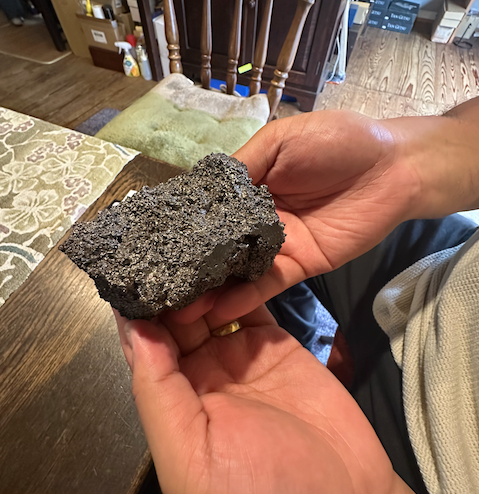
Tatara ironmaking is a traditional Japanese method of smelting iron using iron sand and charcoal. The high-quality steel produced through this process, known as tamahagane, has played an essential role in Japanese craftsmanship, particularly in the making of Japanese swords, knives, agricultural tools, and other traditional implements.
The development of tatara ironmaking in Shimane Prefecture was supported by a combination of natural resources and local expertise. The region had access to high-quality iron sand, abundant forests for producing charcoal, and a technique known as kanna-nagashi, which made it possible to efficiently collect iron sand. These favorable conditions helped foster a distinctive blacksmithing culture that evolved into sophisticated forging techniques, including those used in Japanese sword making, and continues to be passed down today.


Carrying Tradition Forward While Creating New Value
Kajikobo Hiromitsu traces its history back to tatara ironmaking during the Edo period. Over the generations, the workshop has carried on a wide range of blacksmithing traditions, from forged blades, small agricultural tools, and everyday implements to Japanese sword forging. At the same time, it has expanded its craft to create works using tamahagane, traditional Japanese iron, and other forms of iron.
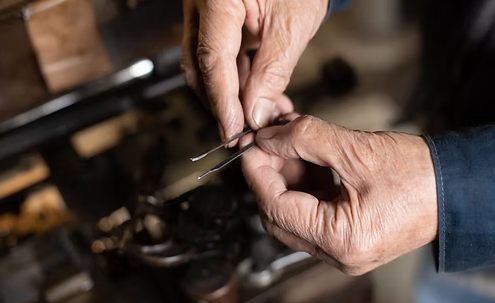
Even in an era dominated by mass production, the workshop remains committed to carefully crafting each piece by hand. While preserving techniques cultivated over its long history and the spirit of Japanese craftsmanship, Kajikobo Hiromitsu continues to explore ways to pass these traditions on to future generations.
In recent years, the workshop launched TANGETSU, a line of forged iron frying pans that applies techniques rooted in Japanese sword making. Rather than relying on conventional press-forming methods, each pan is shaped by repeatedly hammering and forging the iron using traditional techniques. This process gives every piece a distinctive, beautiful hammered texture while also enhancing its functionality.
Forging increases the density of the iron and removes impurities, helping heat distribute evenly across the pan and bringing out the natural flavors of ingredients during cooking. The pans are also designed to transition seamlessly from kitchen to table, allowing food to be served directly from the cookware.
Combining the functionality of a cooking tool with the beauty of a handcrafted object, TANGETSU brings traditional Japanese craftsmanship into contemporary lifestyles. Through the brand, Kajikobo Hiromitsu continues to share its craftsmanship with audiences both in Japan and around the world.

Passing Down Culture and Craftsmanship to the Next Generation Through Experience
Beyond making products, the workshop also offers hands-on forging experiences for visitors. Rather than simply purchasing a finished product, participants can work alongside craftspeople and experience the forging process firsthand, gaining a deeper connection to the techniques and culture that have been passed down in the region for generations.
Through our visit, we were reminded of the powerful appeal of products that are deeply rooted in local history and culture while possessing the beauty of fine craftsmanship. It is this combination of story, place, technique, and artistry that makes Kajikobo Hiromitsu's work truly one of a kind and capable of capturing people's imagination.


Sources:


Comments